
Post Discharge Care Plan: 6 Checks Before Mum Leaves Hospital
Use six bedside checks to confirm medicines, transport and home support, then keep one shared handover record so family carers know what happens next.
By The KinCarer team ·
A post discharge care plan is the agreed arrangements for care, medicines and follow-up once someone leaves hospital. Before you leave the ward, confirm three things: the medicines they will take home, who will be with them at home, and how they will get there safely. Ask for the discharge summary, the “to take away” (TTA) medicines or after visit summary, and the GP letter.
TL;DR:
- Hospital medicines may cover only a short course, so contact the GP early about repeat prescriptions and ask whether a pharmacist can check updated records.
- Intermediate care or reablement is free for up to six weeks, but local availability varies, so ask the ward coordinator to arrange it before departure.
- NHS trusts and local authorities must involve carers in discharge planning and offer assessments, which can lead to practical support, respite, or a personal budget.
- Call the GP for nonurgent concerns, NHS 111 for prompt advice that is not an emergency, and 999 for chest pain, breathing difficulty, or collapse.
Table of Contents
- What should you confirm before you leave hospital?
- How do you manage medicines after discharge?
- What home support can you ask for straight after discharge?
- Which equipment and home checks make a difference?
- What can you expect as a family carer?
- How do you keep everyone working from the same information?
- When should you seek help, and which follow-ups matter?
- How do you track recovery after discharge?
- What emotional support might you both need?
- What should your parent eat after leaving hospital?
- Why a shared plan protects both of you
- How can a shared care planning app help you?
- FAQ
- Sources
What should you confirm before you leave hospital?
Use this list at the bedside, ideally with a relative or friend beside you. NHS guidance on planning for discharge early recommends setting an expected discharge date within 48 hours of admission and involving the person and their family, so ask about the date from the first day.
- Ask for the expected discharge date and time, and the name of the nurse or discharge coordinator who is your contact.
- Arrange transport: hospital patient transport, or a relative or friend who can accompany your parent and see them safely indoors.
- Collect the discharge summary or TTA, plus any appointment letters.
- Check that new medicines are in the bag, and that someone will contact the GP about repeat prescriptions.
- Find out who will visit in the first days, and whether short-term reablement support has been arranged.
- Make sure the house is ready: heating on, food in, a clear route to the bed and bathroom.
Pro Tip: Photograph every page of the discharge paperwork on the ward. Papers get lost in the first chaotic evening at home, and a photo gives you something to share with relatives straight away.
How do you manage medicines after discharge?
Medicines are where discharge most often goes wrong, so spend time on them before you leave. Ask the nurse or ward pharmacist for a clear list of what has started, stopped or changed, and why. NHS England’s toolkit for pharmacy staff warns that communication breakdowns at discharge raise the risk of medication errors, and suggests families can reduce that risk by requesting a copy of the discharge summary.
Hospitals commonly send you home with only a short course of new medicines, and arranging repeat prescriptions falls to the patient or carer, as Guy’s and St Thomas’ NHS Foundation Trust explains.
So contact the GP surgery early, not on the day the tablets run out. The NHS Discharge Medicines Service can also give your parent a pharmacist follow-up, where a community pharmacy checks that changes made in hospital have reached the GP and the dispensing record. A patient leaflet from King’s College Hospital says the same: ask your GP for prescriptions and check whether you are eligible for the service.
Practical jobs that help:
- Keep one up-to-date medicines list and update it after every change.
- Bring all medicines to appointments, including creams and over-the-counter products.
- Book a pharmacy consultation if anything about the new regime is unclear.
- Keep a shared medication log so relatives and paid carers see the same record.
Our guide to managing UK repeat prescriptions covers the GP side in more detail.
What home support can you ask for straight after discharge?
Most people leaving hospital with extra needs are offered short-term help, and you can ask about it from the ward. The NHS explains that intermediate care or reablement is free, lasts up to six weeks, and aims to help people regain independence after a hospital stay. Availability varies by area, and staff can arrange it before your parent goes home.
Different areas use different names, so listen for these:
- Reablement or intermediate care: short-term support at home, focused on getting your parent doing more for themselves again.
- Rapid response teams: community teams that provide care and rehabilitation at home. Cheshire West and Chester Council describes multidisciplinary hubs that co-ordinate this support and adjust it as independence improves.
- Home First or Discharge to Assess: your parent goes home first, and longer-term needs are worked out there. One Kent Community Health NHS Foundation Trust example shows rapid therapy visits and early checks that equipment is correct and usable.
To arrange any of these, speak to the ward’s discharge coordinator or a hospital social worker. A multidisciplinary discharge team usually includes nurses, therapists and a coordinator, so ask who is leading your parent’s plan. The first home visit typically looks at how safely they move around, what they can do for themselves and what help they need next.
Which equipment and home checks make a difference?
Equipment only helps if your parent and you know how to use it. A community rehabilitation service at Berkshire Healthcare NHS Foundation Trust makes the point that therapists should demonstrate safe use, ideally before discharge or at the first home visit. Common items include walking frames, perching stools and commode aids.
- Ask a therapist to show you and your parent how each item works, then try it yourselves.
- Check the size: a frame or stool set at the wrong height can cause the falls it is meant to prevent.
- Walk the route from bed to toilet to kitchen with the equipment, looking for rugs, cables and tight doorways.
- Put essentials, such as phone, glasses and water, within easy reach.
- If the home needs adaptations such as grab rails, ask the therapist or social worker who arranges them.
Pro Tip: Take a photo of the room layout on your phone and show it to the therapist. They can often spot problems from a picture that you would miss.
What can you expect as a family carer?
You are not just a helper in this process. Guidance on supporting unpaid carers sets out that local authorities and NHS trusts have legal duties to involve carers in discharge planning and to offer carer assessments. You can ask for your own assessment, separate from your parent’s, and ask to be included in discharge conversations from the start.
An assessment looks at what caring means for your health, work and family life. Depending on the area, outcomes can include practical support, respite breaks or a personal budget. Ask the ward social worker or your local council’s adult social care team to start the process.
Then build a simple contingency plan, because plans can wobble after discharge:
- Name two emergency contacts and a backup carer who could step in.
- Write down where the key documents live, such as the discharge summary, medicines list and power of attorney papers.
- Keep a printed emergency contact list by the phone.
- Store papers in one place, following our guide to a care document emergency folder.
How do you keep everyone working from the same information?
The biggest risk after discharge is not a lack of effort. It is relatives, paid carers and clinicians each holding a different version of the facts. NHS England’s safe communication guidance describes a structured, centralised “hot sheet” that improves information flow during transfers of care and lowers the chance of missed actions. A patient safety alert from NHS England likewise warns that communication breakdowns at handover are a major safety risk.
Keep one copy of the discharge summary and build your hot sheet from it. Include:
- The current medicines list and any allergies.
- Mobility notes and equipment instructions.
- Next appointments and who is taking your parent.
- Named contacts: GP, discharge coordinator, reablement team.
Share it with every relative and paid carer, and agree who updates it. Our walkthrough on setting up a shared care plan in one meeting shows how, and a daily care log makes day-to-day handover simple.
| What to record | Why it matters |
|---|---|
| Medicines list and changes | Stops duplicate or missed doses |
| Next appointments | Prevents missed follow-ups |
| Equipment instructions | Keeps everyone using it safely |
| Named contacts | Saves time when something goes wrong |
When should you seek help, and which follow-ups matter?
Before leaving the ward, write down the dates of any follow-up clinics, therapy sessions and the GP review, and who will take your parent. Note the discharge coordinator’s name and the ward’s phone number, so you know exactly who to call if something goes wrong in the first days.
Act on changes that worry you, such as new confusion, a fall, worsening pain, breathlessness, a fever or not eating or drinking. Use these routes:
- Call the GP for concerns that are not urgent.
- Call NHS 111 when you need advice quickly, but it is not an emergency.
- Call 999 for severe symptoms such as chest pain, difficulty breathing or sudden collapse.
Trust your instincts. You know your parent’s normal better than anyone, and a gentle “something is off” is reason enough to ask for advice.
How do you track recovery after discharge?
Recovery rarely moves in a straight line, and a few days of small notes make the pattern visible. Write down each day how your parent slept, ate and drank, how much pain they reported, and how they moved around the house. Add anything unusual, such as dizziness, a new cough or a missed dose.

Record milestones too, because they show progress that is easy to miss when you see someone every day. Examples: walking to the toilet unaided, managing the stairs, making a cup of tea, dressing without help or going outside for the first time. When the reablement team or GP asks how things are going, you can answer with specifics instead of a vague “so-so”.
A simple routine works best:
- Set one time each day, perhaps the evening, to jot down notes.
- Keep the notes in the same place as your hot sheet so everyone can see them.
- Highlight changes to raise with the GP or therapist, such as a steady decline in appetite or increasing breathlessness.
- Bring the notes to every follow-up appointment.
Recovery also looks different at different ages. Ageing bodies often take longer to regain strength after a hospital stay, so a slow week is not a failure. What matters is the direction of travel over several weeks. If your notes show little or no improvement, or things getting worse, ask for a review rather than waiting for the next scheduled appointment.
What emotional support might you both need?
Leaving hospital is a relief, but it often brings a wave of feelings that nobody mentions on the ward. Your parent may feel anxious about managing at home, frustrated by needing help or low after being unwell. They may worry about being a burden. These reactions are common, and they do not mean something has gone wrong.
You may feel the strain too. Many carers describe the emotional weight of suddenly organising medicines, appointments and visits while worrying about what could go wrong. If you are also working or looking after children, it can feel like carrying the whole load alone.
Small things help:
- Let your parent make as many choices as possible, from what to wear to when to have a rest. It restores a sense of control.
- Keep a gentle routine, with meals, a short walk or visitors at predictable times.
- Say out loud that recovery takes time, and that bad days are normal.
- Share the load. Hand out specific jobs to siblings or friends rather than waiting to be offered help.
- Ask for your own carer’s assessment, because your wellbeing counts as part of the plan.
If low mood, anxiety or poor sleep concerns you, or your parent seems withdrawn, contact the GP to discuss support. You do not have to wait for a crisis to ask for help, and speaking up early is a sign of good caring, not weakness.
What should your parent eat after leaving hospital?
Hospital stays can sap appetite and strength, and eating well supports recovery. Aim for regular small meals, with protein at each one, and plenty of fluids. If your parent’s appetite is poor, little and often usually works better than three large plates.
Check the discharge paperwork for any dietary instructions. Some people leave hospital with advice to follow a specific diet, for example after surgery, with diabetes or when swallowing is difficult. If the guidance is unclear, ask the ward, a dietitian or the GP before you go shopping.
Practical ideas:
- Stock the cupboards and freezer before discharge, with easy options such as soup, eggs, yoghurt and ready meals your parent likes.
- Leave drinks within reach, since dehydration is easy to miss.
- Watch for weight loss, clothes becoming loose, or food left on the plate, and note it in your daily log.
- Ask whether meals on wheels, a friend’s batch cooking or a supermarket delivery slot could take pressure off.
Mealtimes can also be social and reassuring, so eat together when you can. If you are worried that your parent is eating very little, tell the GP, who can arrange a nutritional review.
Why a shared plan protects both of you
We see the same pattern again and again: errors after discharge rarely come from carelessness. They come from information living in different places, such as a paper summary in one handbag, a text from a nurse and a hurried phone call. A single shared record fixes that. Picture a daughter who updates a new tablet dose in one place, so her brother, who covers Thursday visits, never gives the old dose and the follow-up clinic is not missed. Write the plan down, share it with everyone involved, and keep it current.
— KinCarer
How can a shared care planning app help you?
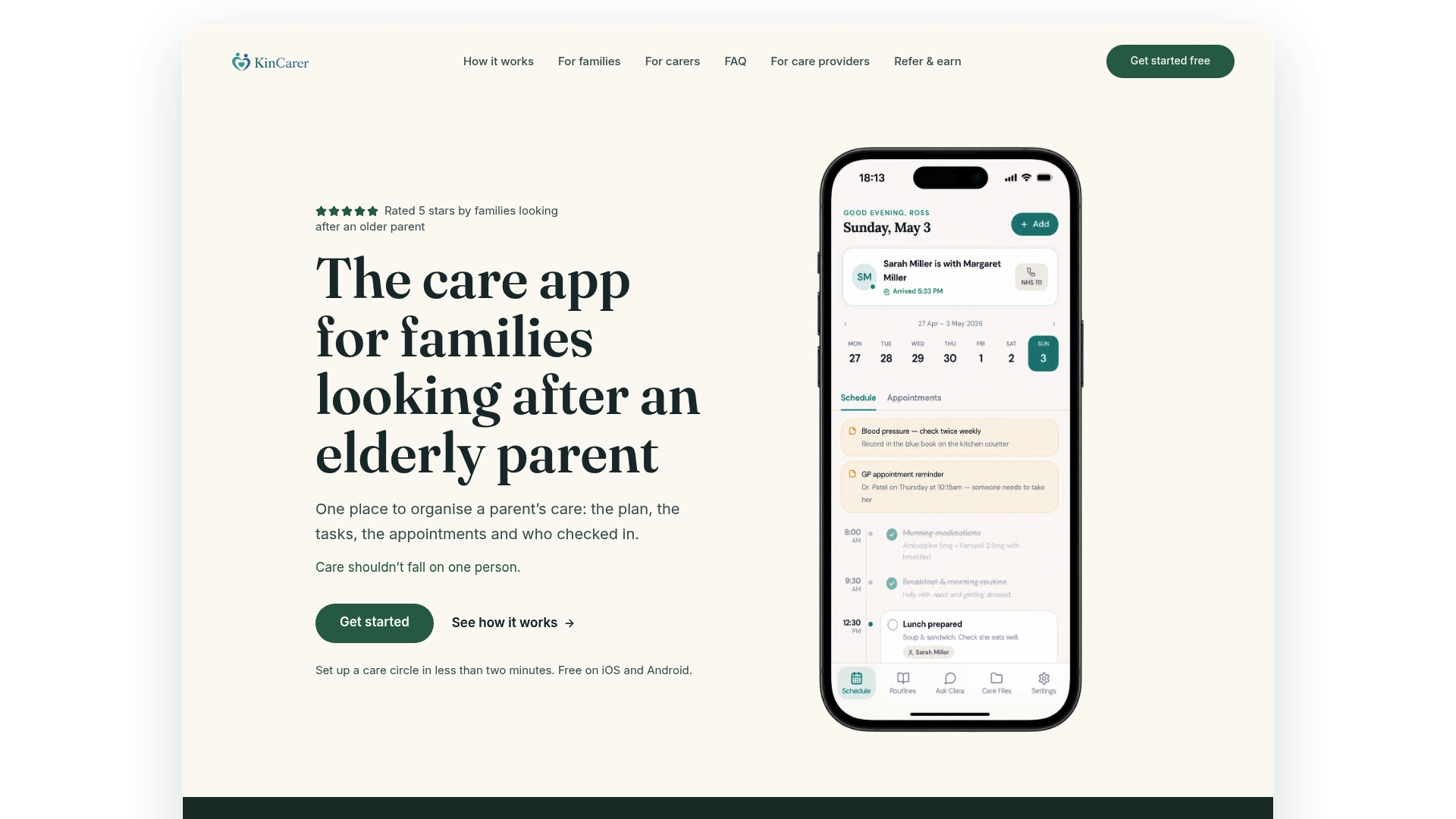
We built KinCarer so families do not have to hold the whole plan in their heads. You can set up a shared care circle for your parent and invite relatives and paid carers into it. It helps you keep everything in one place:
- Medication reminders and notes
- Task lists, so everyone knows who is doing what
- Appointment tracking for follow-ups and therapy
- Document storage for the discharge summary and contact details
It supports handover and contingency planning, though it does not give medical advice. Find out more on our care app for families page, or see how Family+ works after the 14-day free trial.
This article is general information, not a substitute for advice from a qualified doctor. Consult a qualified healthcare professional about your own circumstances before acting on anything here.
FAQ
What are the steps of discharge planning?
Discharge planning usually starts soon after admission and moves from assessing needs to agreeing a care plan, arranging medicines, transport and any home support, and confirming follow-up. NHS guidance says a discharge assessment identifies whether you need more care after leaving hospital. Ask the ward team who is coordinating your plan.
What happens when an elderly person is discharged from hospital?
The ward team confirms they are medically ready, sorts out medicines and paperwork, and arranges transport and any short-term support. A multidisciplinary team of nurses, therapists, social workers and a discharge coordinator usually works together on this. Once home, your parent may receive reablement visits and a GP follow-up.
What is the 7-day post-discharge follow-up?
It is a check-in shortly after leaving hospital, often with the GP, community team or pharmacy, to see how recovery and medicines are going. The exact arrangements depend on your area and your parent’s needs. Ask the discharge coordinator what is planned and write the dates on your hot sheet.
What does “post discharge” mean?
It describes the period after someone leaves hospital, when care, medicines and follow-up continue at home or in another setting. A post discharge care plan covers what support is needed, who provides it and when it will be reviewed.
Sources
- Pharmacy - Your medicines in hospital | Guy’s and St Thomas’ NHS Foundation Trust
- Care and support you can get for free - Social care and support guide - NHS