
Shared medication log: 5 MAR fields and a safe setup for UK families
Set up a shared medication log for an elderly parent with five MAR fields, clear carer roles, consent, and practical UK guidance for handovers.
By The KinCarer team ·
A shared medication log must be one up to date, MAR style record that every authorised carer can access and update. The immediate step is to pick a single digital record rather than juggling notebooks and texts, then build it around the right fields, clear consent, and prompt updates whenever a doctor or pharmacist changes something.
TL;DR:
- Record each medicine’s name, strength, form, dose, timing, route, purpose, prescriber, and known allergies; include over the counter medicines and supplements, not just prescriptions.
- Name a lead carer, give others view or edit access as needed, and have everyone check the log before dosing, then timestamp entries immediately.
- After hospital discharge, GP changes, or pharmacy reviews, compare the log with at least two reliable sources, document discrepancies, resolution dates, and the person responsible.
- Document the lawful basis and each person’s permission, especially for paid carers; when capacity is uncertain, honor expressed preferences and restrict access to necessary information.
Table of Contents
- MAR-style fields every shared medication log must record
- Step-by-step: set up and run a shared digital medication log with multiple carers
- Data protection and consent: sharing health data lawfully in a family care circle
- Medicines reconciliation, hospital handovers and MAR best practice
- Roles, handovers and simple rules for multi-carer coordination
- Practical example: how KinCarer supports a safe shared medication log
- KinCarer’s view: three simple rules to reduce missed doses this week
- Try KinCarer to set up a shared medication schedule and care circle
- FAQ
- Sources
MAR-style fields every shared medication log must record
A proper medication record is more than a shopping list of pills. Local authority guidance makes clear that a formal MAR chart needs far more detail than an informal note, and that families supporting someone with several medicines should avoid ad-hoc jottings once things get complicated. The CQC’s guidance on medicines administration records sets out what belongs in a complete entry, and records should be shared promptly whenever someone moves between care settings.
Your shared log should capture, for every medicine:
- Name, strength, form and exact dose (for example, paracetamol 500mg tablets, two tablets)
- Timing or frequency, and the route it’s taken by (orally, topically, by injection)
- What it’s for, who prescribed it, which pharmacy dispenses it, and the start or stop date
- The last dose given and the rules for any “as needed” (PRN) medicine
- Known allergies, interactions to watch for, and where supporting paperwork lives, such as prescription slips or discharge letters
Over the counter medicines and supplements count too. A log that only tracks prescriptions can miss an interaction that matters.
Step-by-step: set up and run a shared digital medication log with multiple carers
Once you know what to capture, the next job is making sure everyone uses the same version of it. Two carers working from two different lists is how doses get doubled or missed.
- Choose one shared digital record and invite every person who helps with medicines, whether that’s a sibling, a home care agency worker, or a neighbour who pops in.
- Set permissions so each person has the right level of access: some may only need to view the log, while the lead carer or a GP-nominated family member can edit or sign off changes.
- Turn on notifications so everyone is alerted when a dose is logged, missed, or a new medicine is added.
- Agree a daily logging routine: log the dose as it’s given, timestamp it, and note anything unusual, such as a PRN dose given for pain or a dose refused.
- Add GP, pharmacy and hospital discharge details as they come in, and keep the original document (letter, printout, photo) attached or filed alongside the entry.
Pro Tip: Log the dose the moment it’s given, not at the end of the day. A log filled in from memory hours later is far more likely to have gaps.
Before you finish your first setup session, run through a quick checklist: everyone invited, permissions set, notifications on, and the current medicine list entered in full. That one meeting saves weeks of confusion later.

Data protection and consent: sharing health data lawfully in a family care circle
Sharing a parent’s medical details with several people, even close family, means handling personal data carefully. The ICO’s data-sharing code of practice sets out practical steps for sharing personal data lawfully, including documenting who agreed to what and using safeguards such as data protection impact assessments where needed.
In practice, that means:
- Establishing a lawful basis for sharing, separate from simply having mum’s verbal agreement, and writing down who consented and when
- Using a short, written permission form kept alongside the medication log when formal consent is needed, especially if a paid carer or agency is involved
- Giving each person only the access they genuinely need (view only for occasional helpers, edit rights for the lead carer), and checking who has accessed the record from time to time
- If there’s uncertainty about your parent’s capacity to consent, recording their expressed preferences and limiting what’s shared to what each carer needs to do their job safely
None of this needs to be complicated, but it does need to be deliberate rather than assumed.
Medicines reconciliation, hospital handovers and MAR best practice
Medicines change constantly around hospital stays, GP appointments and pharmacist reviews, and that’s exactly when logs fall out of date. Guidance on medicines reconciliation from Buckinghamshire Healthcare describes reconciliation as a three-step process: collect information from at least two reliable sources, compare it against what’s currently recorded, and document any discrepancies and changes.
Follow the same structure at home:
- Collect the current list from the GP surgery, the discharge letter and the pharmacy, rather than relying on one source alone
- Compare it against what’s in your shared log line by line
- Document every discrepancy, the date it was resolved, and who made the update
Review the list every time your parent leaves hospital, after any GP medication change, and following a pharmacist review. A digital log that timestamps each entry and records who updated it, and from which source, makes it far easier to spot an error before it causes harm.
Roles, handovers and simple rules for multi-carer coordination
When several people share the caring, a handful of agreed rules prevents the classic mix-ups: two people giving the same dose, or nobody noticing a dose was skipped.
- Agree a named lead carer who is responsible for keeping the log accurate, and write this into the care plan, as NICE’s quality standard on medicines management recommends when several carers are involved.
- Use handover notes for anything unusual, such as a PRN dose given overnight or a new pack of tablets collected from the pharmacy, and have the carer sign or initial the entry.
- Make it a habit: always check the shared log before giving any medicine, then confirm and timestamp it straight after, every time, without exception.
Practical example: how KinCarer supports a safe shared medication log
We built KinCarer around exactly this problem: too many carers, too many versions of the truth. Our shared care circles let relatives and paid carers work from the same record, with permissions set per person so a weekend helper sees only what they need.
- We give every care circle medication reminders and handover notes, so a dose logged by one carer is visible to everyone else instantly
- Clara, our optional AI assistant, can summarise recent medication activity recorded in the circle, without ever offering clinical advice
- We publish a copyable shared medication schedule template built around the fields covered above, so you’re not starting from a blank page
Families setting up a log for the first time often pair it with our guide to running a one-meeting setup for a shared care plan, which covers consent and responsibilities alongside the medicines list itself.
KinCarer’s view: three simple rules to reduce missed doses this week
Most missed doses we hear about don’t come from a lack of care. They come from two people assuming the other one gave the tablet. Three changes fix most of that: pick one shared record and name a lead who owns updating it, write down who’s consented to see what, and use a template with proper MAR fields rather than a running text thread. Update it the moment anything clinical changes. None of this takes long, and it closes the gap where most errors creep in.
— KinCarer
Try KinCarer to set up a shared medication schedule and care circle
Everything in this piece maps directly onto what we’ve built. Start a care circle, invite the people who help your mum or dad, and you’ve got the shared record and the permissions in one place rather than stitched together from notebooks and group chats.
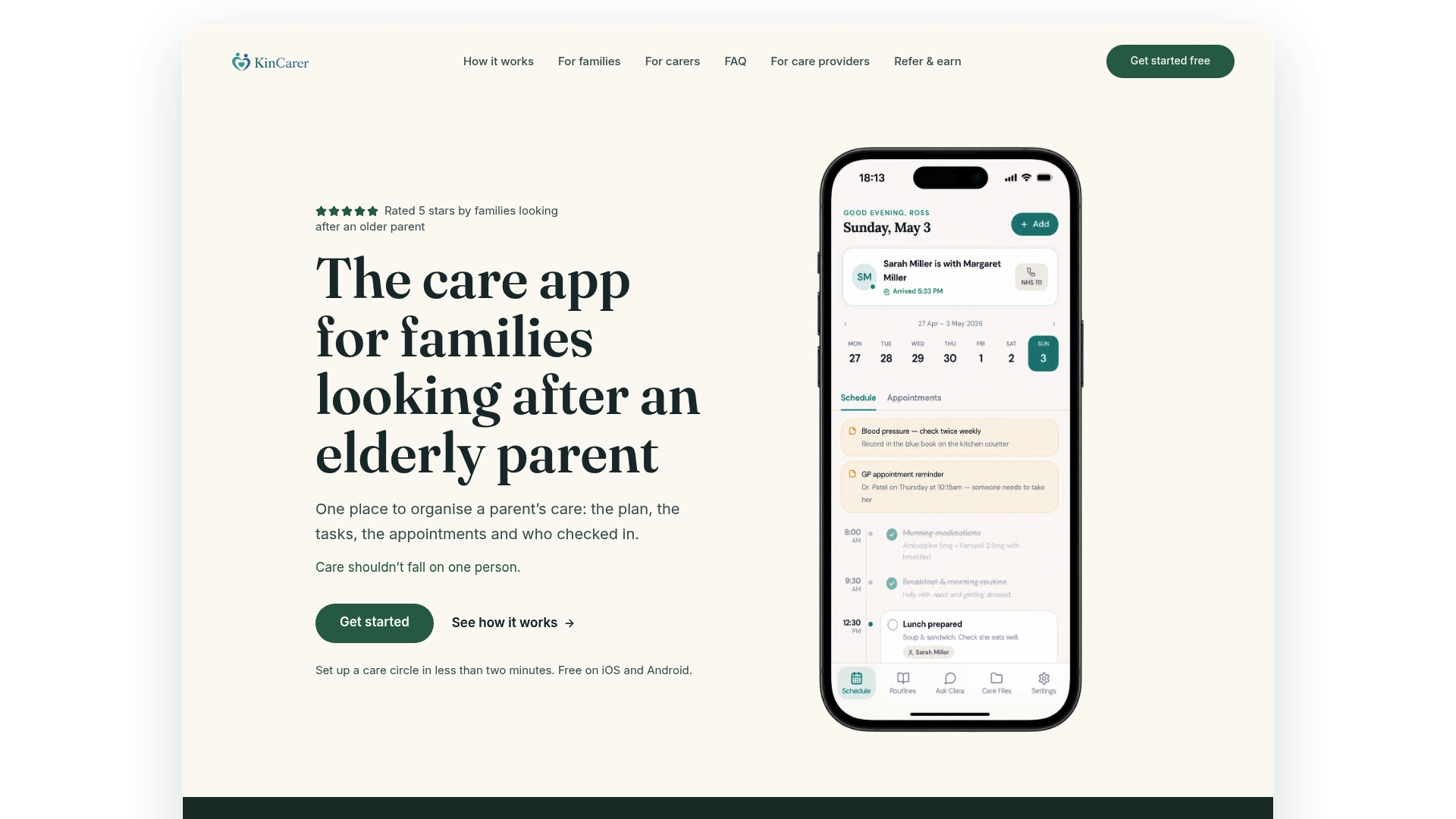
- Add your parent’s current medicines and medication reminders to the care circle
- Invite co-carers as family members or paid carers, and choose what paid carers can see
- Ask Clara to summarise recent entries when several people are logging doses
Our Family+ plan starts with a 14-day free trial, then runs monthly or yearly, and one subscription covers everyone you invite into the circle. Start at Kincarer and have your first shared log running before the day is out.
This article is general information, not a substitute for advice from a qualified doctor. Consult a qualified healthcare professional about your own circumstances before acting on anything here.
FAQ
What should a shared medication log always include?
It should record the medicine’s name, strength, form, dose, timing and route, along with what it’s for, who prescribed it, and known allergies. The CQC’s guidance on medicines administration records sets these out as the core fields a proper record needs.
Is a digital medication log as valid as a paper MAR chart?
Yes, a digital MAR is recognised as an acceptable alternative to a paper chart provided it offers the same clarity and gives authorised carers proper access, according to local authority medicines administration guidance. The format matters less than whether everyone involved can see and trust the same up to date list.
Do I need written consent to share mum’s medication list with family?
A written or simple permission form is good practice whenever several people, especially paid carers, will access the record, and the ICO’s data-sharing code recommends documenting who agreed to what. Where there’s doubt about your parent’s capacity to consent, record their known preferences and limit access to what each carer genuinely needs.
When should we update the shared log after a hospital stay?
Update it as soon as you have the discharge letter, comparing it against the GP and pharmacy records before changing anything in the log, a process known as medicines reconciliation. Reconciliation guidance from Buckinghamshire Healthcare recommends checking at least two reliable sources every time, not just updating from memory or a verbal handover.
How does KinCarer help multiple carers stay on the same medication list?
KinCarer gives every care circle a shared, permissioned medication log with reminders and handover notes, so relatives and paid carers all see the same up to date record. KinCarer starts with a 14-day free trial, then Family+ monthly or yearly, and includes Clara, our optional AI assistant, which can summarise what the circle has recorded without giving clinical advice.
Sources
For primary guidance, see NICE’s shared medication information, CQC’s MAR guidance and the ICO data-sharing code. For a ready-to-use format, see our shared medication schedule template.
- Medicines administration records (adult social care) | CQC
- Medicines reconciliation - accurately listing a resident’s medicines (Buckinghamshire Healthcare)
- Quality standard 171: Medicines management (NICE)
- Data sharing: a code of practice | ICO