
Share Medical Info in UK Care Apps: Next of Kin Is Not Enough
Learn when UK family carers can share medical information, how the Mental Capacity Act and an LPA affect consent, and how to record app permissions.
By The KinCarer team ·
Yes, you can share your mum’s or relative’s medical and care information through a family care app, and the immediate condition is simple: you need their informed consent, or if they lack the mental capacity to give it, a decision made in their best interests or lawful authority through a registered health and welfare Lasting Power of Attorney or deputy. Consent should be specific, recorded, and able to be changed or withdrawn at any time. A good app gives you somewhere to store that permission and a clear record of who has access to what.
TL;DR:
- Dementia alone does not remove capacity; if your relative cannot decide, sharing needs a best interests decision or registered health and welfare LPA or deputy.
- Record who may see which information, under what circumstances, and how; assign view, comment, edit, or limited admin permissions to match each person’s role.
- Share only details needed for care, such as medication, appointments, mobility, and brief observations; keep diagnoses, sexual health, and financial information private unless explicitly permitted.
- Review consent after discharge, a new diagnosis, and at least annually; timestamp changes and note who was informed and where updated paperwork is stored.
- A family care app supports coordination through medication lists, appointments, and handover notes; it does not provide formal access to NHS medical records.
Table of Contents
- What consent means in practice for families using a shared care app
- Who can lawfully decide to share information
- Step-by-step: capturing consent and setting permissions in your care app
- Deciding what to share: data minimisation in daily care
- Keeping consent current: reviewing, changing and recording decisions
- Our take on supporting consented sharing in family care apps
- Managing consented sharing with KinCarer
- FAQ
- Sources
What consent means in practice for families using a shared care app
Consent comes in two forms, and the difference matters once you start adding details to a shared care app. Explicit consent is when your relative clearly says yes, in words or in writing, to specific information being shared with specific people. Implied consent is different: it can apply when sharing is part of direct, everyday care, such as a district nurse updating a carer on a dressing change, but it has real limits and should never be stretched to cover sensitive details shared more widely than intended.
The Mental Capacity Act starts from a clear principle: we presume your relative has capacity unless it has been properly assessed otherwise. That means they can consent to sharing, limit what gets shared, or withdraw consent entirely, and we should respect that unless there’s good reason not to.
It helps to keep two things separate in your mind:
- App-level sharing between family members and invited carers is not the same as formal NHS record access between healthcare organisations.
- What belongs in a shared care app is family-held information: notes, medication lists, appointment times, and handover updates, not clinical records themselves.
Keeping that boundary clear protects your relative’s privacy and keeps the app doing the job it’s meant for: coordination, not clinical documentation.
Who can lawfully decide to share information
Working out who can say yes or no to sharing is often the trickiest part, especially when your relative’s memory or understanding has started to slip. A diagnosis of dementia or confusion doesn’t automatically mean someone lacks capacity to decide what happens to their own information. Capacity is assessed decision by decision, and unless there’s been a formal assessment showing otherwise, we should assume your relative can still choose.
One misconception trips up a lot of families: being the “next of kin” gives you no automatic legal right to see or share someone’s medical information. It’s a useful contact label, not a legal status.
- Start by talking to your relative directly, in plain terms, about what you’d like to share and with whom, and note down what they say.
- If capacity is genuinely in doubt, ask their GP whether a formal capacity assessment is needed before relying on anyone else’s judgement.
- Check whether a health and welfare Lasting Power of Attorney or a court-appointed deputy is already in place, since either can lawfully make sharing decisions once your relative can’t.
- Ask to see the registration date and reference number on any LPA or deputyship order before treating it as valid, so professionals can verify it quickly if asked.
- When authority is still unclear, keep dated notes of every conversation and decision while you sort it out, rather than guessing.
A registered LPA or deputy order doesn’t need to be complicated to use well. Upload a scan to your family’s shared care app, note the registration date, and you’ve got something you can point to the moment a GP receptionist or hospital ward asks who’s authorised to speak for your relative.
Step-by-step: capturing consent and setting permissions in your care app
Once you know who can consent and what they’ve agreed to, the next job is recording it somewhere everyone can see, not just in your head or in a text message that gets buried. A short, specific consent conversation does most of the work. Ask your relative: who should see this information, what types of information (medication, appointments, notes), under what circumstances, and how should access work. Write the answer down as a timestamped note in the app, or photograph a signed form if your relative prefers something on paper first.
From there, permissions do the practical work of respecting that consent:
- View only suits relatives who want to stay informed without adding or editing anything, such as a sibling living further away.
- Comment works for family members helping with day-to-day decisions who need to flag concerns without changing the core plan.
- Edit access fits whoever is doing hands-on coordination: updating medication times, logging appointments, adding handover notes.
- Admin access should stay limited to one or two people, typically whoever set up the care circle, since it controls who else gets invited.
Paid carers from a home care agency usually only need view or comment access to the specific sections relevant to their visits, not full admin rights to the whole family’s care circle.
Pro Tip: Every time you change someone’s permission level, add a one-line note explaining why and when, so the audit trail tells the full story without you needing to remember it later.
Keep copies of any LPA or deputy paperwork stored in the app rather than scattered across emails or a drawer at home, and timestamp each permission change as it happens. That small habit saves real stress later if a professional, or another family member, asks who had access and when.

Deciding what to share: data minimisation in daily care
Not everything belongs in a shared family app, even once you’ve got consent to share information generally. The NHS guidance on confidentiality is clear that only information relevant and necessary for care should be shared, and that principle applies just as much between family members as it does between professionals.
Information that typically belongs in a shared care app includes:
- Daily medication lists, including dosages and times.
- Upcoming appointments and who’s taking your relative.
- Mobility needs or recent changes that affect day-to-day support.
- Short observations relevant to ongoing care, such as appetite or sleep changes.
Treat diagnosis details, sexual health information, and financial matters as sensitive by default, and only post them with your relative’s explicit permission. Where something needs to be recorded but shouldn’t be visible to the whole care circle, use a private folder or a secure document store rather than a general notes feed, and label entries clearly so nobody opens something they shouldn’t by accident.
Keeping consent current: reviewing, changing and recording decisions
Consent isn’t a one-off form you fill in and forget. It’s worth revisiting after a hospital stay, following a new diagnosis, or simply once a year as a routine check-in, since circumstances and wishes can shift quietly over time.
- Set a reminder to ask your relative, in a low-pressure moment, whether they’re still happy with who sees what.
- When something changes, record it immediately: a timestamped note naming what changed, who was told, and where any updated paperwork is stored.
- Keep that record inside the same app your family already uses for care coordination, rather than in a separate document that’s easy to lose track of.
Pro Tip: A simple phrase works well for recording consent: name who can see information, what type, under what circumstances, and how. Save it as a dated entry, and update it the same way each time something changes.
An audit trail matters more than it might seem at first. When a professional asks who currently has access to your relative’s care information, or when family members disagree about what should or shouldn’t have been shared, a clear, dated record settles the question without guesswork or hurt feelings.
Our take on supporting consented sharing in family care apps
We built KinCarer around the idea that sharing care information should be easy to do properly, not just easy to do. Shared care circles let you invite relatives and paid carers with different permission levels, so access matches what each person actually needs rather than defaulting to “everyone sees everything.” Document uploads give you somewhere secure to store LPA paperwork or signed consent forms.
Clara, our optional AI assistant, helps you search and summarise what’s already in your care circle, such as pulling together recent medication changes before a GP appointment, but she doesn’t offer medical or legal advice. For consent language that professionals will recognise, our caregiving guides cover consent, medication schedules and handovers in more detail.
Managing consented sharing with KinCarer
Getting consent right takes a conversation. Keeping it organised afterwards is where a shared care app earns its place, and that’s exactly what we’ve built KinCarer to do.
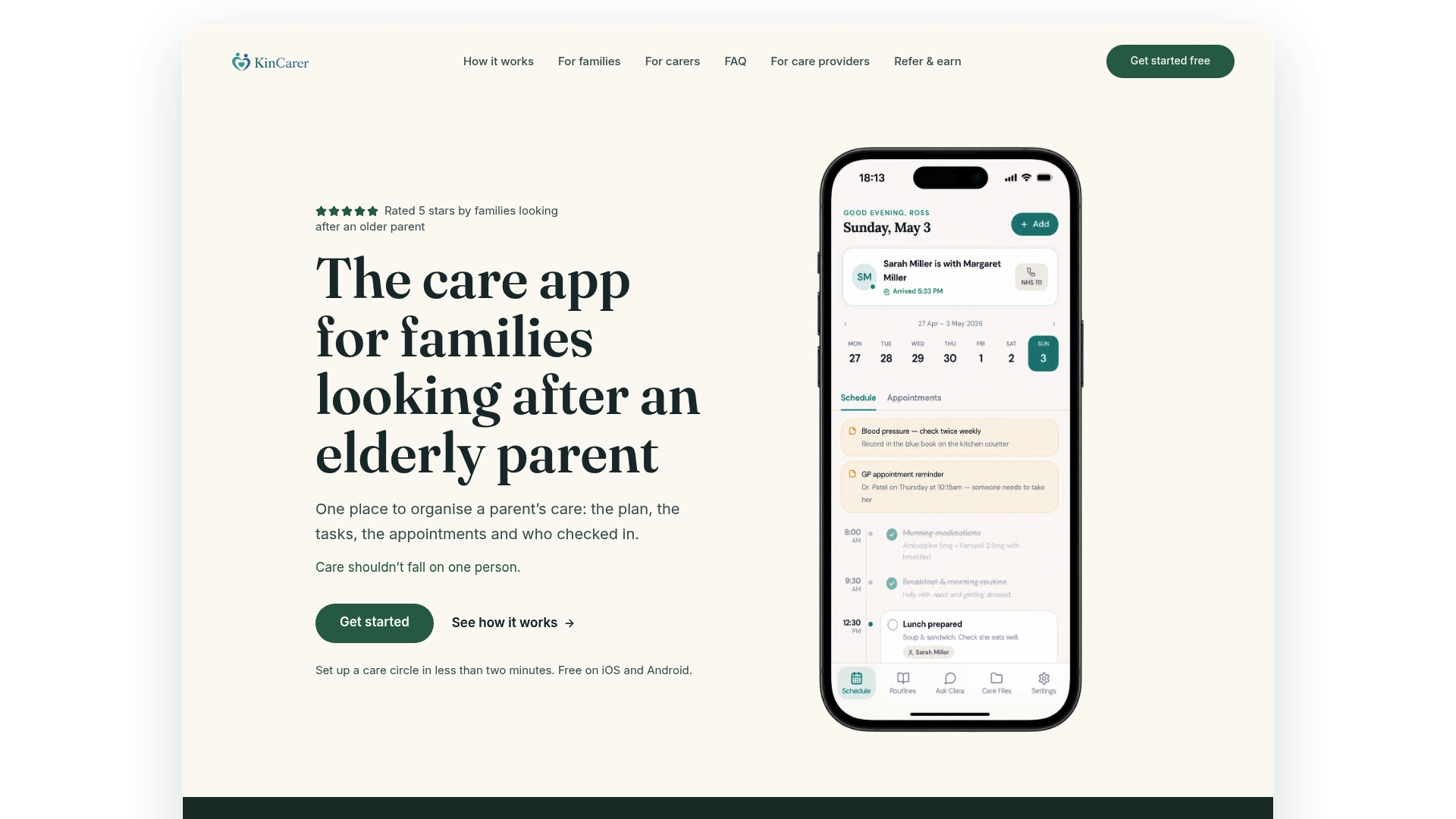
Inside a KinCarer care circle, you get:
- Shared care circles that bring relatives and paid carers together with the right permission level for each person.
- Medication reminders that keep dosage and timing visible to whoever is on shift.
- A document store for LPA paperwork, consent forms and signed scans.
- Handover notes and check-ins, so everyone can see what happened recently.
If your family is still working out who needs to see what, our guide on naming roles and coordinating care remotely walks through getting a care circle up and running within a few days. When you’re ready to put consented sharing into practice, take a look at our Family+ plan or visit Kincarer to see how the features fit together.
This article is general information, not a substitute for advice from a qualified doctor. Consult a qualified healthcare professional about your own circumstances before acting on anything here.
FAQ
Can I share my mum’s medical information without her consent?
Generally, no. NHS guidance expects explicit consent before health information is shared with family, unless your relative lacks the capacity to decide, in which case sharing must be based on a best-interests decision or lawful authority such as a registered LPA.
Does being next of kin give me the right to see medical records?
No, “next of kin” is a contact label, not a legal status, and it doesn’t grant automatic access to someone’s medical information. Access or sharing rights come from the person’s own consent, or from a registered health and welfare Lasting Power of Attorney or court-appointed deputy.
What happens if my relative can’t give consent in an emergency?
In an emergency, professionals can act and share necessary information under the principle of acting in the person’s best interests, without waiting for consent that can’t practically be obtained. The Mental Capacity Act framework supports this approach while still expecting any decisions and reasoning to be recorded afterwards.
How often should we review consent for sharing care information?
It’s worth revisiting consent after any significant change, such as a hospital discharge or new diagnosis, and at least once a year as routine good practice. Recording each review as a dated note keeps a clear history of what your relative agreed to and when.
Is sharing information through a care app different from sharing NHS medical records?
Yes. A family care app is generally used for day-to-day coordination, things like medication lists, appointment times and handover notes, rather than formal access to official NHS medical records held between healthcare organisations. The consent principles are similar, but the scope of what’s shared and who holds it is different.
category:legal-money
— KinCarer
Sources
- NHS — Mental capacity and the Mental Capacity Act
- NHS Digital — Guide to confidentiality in health and social care (section 8)