
Hospital Go Bag for an Elderly Parent: What to Pack
What to pack in a hospital go bag for an elderly parent, from medicines lists and documents to glasses, chargers and comfort items.
By The KinCarer team ·
A hospital go bag is a small, packed bag kept somewhere obvious, so that if your mum or dad is admitted in a hurry, nobody has to think through what to bring while they are frightened and short of time. It holds a medicines list, key paperwork, the things they cannot see or hear without, a change of clothes, basic toiletries and a phone charger. Below is what to put in it, what to leave out, how to adapt it for dementia, and how to keep it ready without it becoming one more job that falls on you.
TL;DR
- Pack an up-to-date medicines list with allergies, a short list of health conditions, and any key paperwork, such as power of attorney or a DNACPR order if one exists.
- Include glasses, hearing aids with spare batteries, loose front-fastening nightwear, slippers, toiletries, and a phone with charger.
- Keep it small and leave valuables at home: hospitals have little storage space and advise against large bags and jewellery.
- For someone with dementia, add a completed ‘This is me’ document so staff understand what keeps them calm.
- Label the bag, keep a last-minute list on it, and share what is inside with your siblings so anyone can grab it.
Table of Contents
- Why a go bag is worth preparing before you need it
- The essentials: information and paperwork
- Things they cannot manage without
- Clothing and toiletries
- Comfort and small extras
- What to leave at home
- Adapting the bag for dementia, delirium or other communication needs
- What about the ‘Red Bag’?
- A printable-style checklist
- Keeping the bag ready without it becoming another job
- Our view: the bag is only half the handover
- Keep the bag and the care plan in one place
- Talking to the hospital: what to check first
- FAQ
- Sources
Why a go bag is worth preparing before you need it
Most emergency admissions do not come with notice. A fall, a chest infection, a sudden confusion: the ambulance arrives, and the next hour is a blur of questions. Someone asks what tablets your mum takes, and you realise the only list is in her head, or on the fridge at her house, or in a WhatsApp message from three months ago.
NHS trusts that write about planning ahead say the same thing in plain terms: if an emergency admission is likely, prepare a hospital grab bag, keep it somewhere obvious, label it as the grab bag, and keep a list of anything to add at the last minute. That last point matters. Some things cannot live in the bag permanently, like her current glasses or the phone she uses every day, so the list on the bag tells whoever grabs it what to throw in on the way out.
If you are the person who usually organises everything, a ready bag also means that when you are at work or two hundred miles away, a sibling, a neighbour or a paid carer can do it for you.
The essentials: information and paperwork
The most useful things in the bag are not objects. They are pieces of paper (or a clear phone note) that tell hospital staff who your parent is and what they take.
Medicines list
An up-to-date list of medicines or repeat prescriptions, including allergies, is the first thing the Torbay and South Devon guidance says to include. Write down the name, strength, how often and what each is for, as far as you know it.
St George’s University Hospitals also asks patients to bring all the medicines they take or use, which covers prescription medicines, ones bought over the counter and alternative remedies such as herbal products. So the list should include the vitamins, creams, eye drops and inhalers that people often forget to mention because they do not think of them as ‘proper’ medicines.
A few practical habits help:
- Date the list, and replace it whenever a dose changes.
- Keep one copy in the bag and one photographed on your phone.
- Note who prescribed what, and the name of the GP surgery and pharmacy.
If your parent takes five or more medicines, a single shared list that everyone updates is far more reliable than several versions. Our shared medication schedule template and UK checklist walks through how to build one.
A short summary of health conditions
The same NHS guidance suggests a list of the main health conditions or episodes. Keep it to one side of A4: diagnoses, recent hospital stays or operations, and anything staff would want to know quickly, such as swallowing difficulties or a pacemaker. Write facts, not interpretations. You are handing over information, not diagnosing.
Legal and care paperwork
Where they exist, the Torbay and South Devon guidance lists relevant paperwork such as a power of attorney (lasting or enduring), a living will or advance decision, and the original DNACPR order. Bring copies of the first two unless you have been told otherwise, but note that the DNACPR guidance says the original order should travel with the person. If you are unsure what your parent has in place, ask their GP rather than guessing.
Do not assume that having a document in a drawer means staff can see it. The point of the bag is that the paperwork arrives with your parent. Our guide to keeping one emergency folder of care documents explains what to gather and how consent works for UK families, and the piece on medical document storage for hospital handovers covers how to make sure the right people can find them.
Contacts
Write down who should be called, in what order, and who holds a key to the house. Include the GP surgery, a named family contact and any paid carer or home care agency. A one-page emergency contact list kept in the bag stops you phoning round from the waiting room trying to remember numbers.
Things they cannot manage without
The items most likely to cause distress when missing are the ones that let your parent see, hear, move and understand what is going on.
- Glasses. Pack a spare pair if there is one, and a case.
- Hearing aids. Take spare batteries, or the charger for rechargeable ones. The Torbay and South Devon guidance lists glasses and hearing aids with batteries among the core items.
- Dentures. Include a labelled pot.
- Walking aids. NHS Royal Devon asks patients to bring aids they normally use, such as spectacles, walking frames, sticks, crutches, wheelchairs or prostheses. King’s College Hospital says patients should use the walking aid they normally use or one provided during their stay. A frame is rarely going to fit in a go bag, so put ‘walking frame’ on the last-minute list.
- Phone and charger. Add a long charging cable, since sockets are often awkwardly placed. St George’s notes that a phone or tablet can be brought, but at the patient’s own risk.
Label everything with your parent’s name. Small items go missing in busy wards. NHS Royal Devon advises using patient property baskets, if available, for small things such as dentures, hearing aids and spectacles so they do not get lost, and says if there is no basket you can ask ward staff where to store them. It also notes that high-cost digital hearing aids should be insured, which is worth checking on the home insurance before you need it.
Clothing and toiletries
Keep this simple, washable and easy to put on. Many older people find buttons, zips and tight cuffs hard, particularly if they have a drip or a bandage.
From the NHS guidance, a sensible set is:
- Loose, comfortable, front-fastening nightwear (two sets if you can)
- A dressing gown and non-slip slippers or supportive footwear
- Spare underwear and socks
- Comfortable daywear, such as loose trousers or a jogging-style set and a top
- A cardigan, since wards can feel cool or warm at odd times
On the daywear: King’s advises patients to get out of bed if they can and it is safe, dress in comfortable loose-fitting clothes, and take short walks if able. Being dressed can also help your parent feel more like themselves. So even if the first night is in a gown, a change of clothes is worth packing.
For toiletries, NHS Royal Devon lists a toothbrush, toothpaste, soap, deodorant, towel and a flannel or sponge. Add a hairbrush, any denture cleaner, and lip balm. Use travel-sized items so the bag stays small, and keep a separate sealed set in the bag rather than raiding the bathroom each time.
Comfort and small extras
Hospital wards are often noisy and brightly lit at night. NHS Royal Devon suggests something to read, an eye mask and earplugs, which can help your parent rest. St George’s suggests books, magazines, paper and pens.
Some thoughtful additions that families often find make a difference:
- A large-print puzzle book or crossword
- A notepad and pen, so your parent (or you) can write down what a doctor says
- A family photo, if it will not be a worry to keep safe
- Boiled sweets or a favourite biscuit, as long as there are no dietary restrictions. Check with ward staff first.
- A small amount of cash. Torbay and South Devon suggests it can be useful for a newspaper, snacks, a TV token or a payphone, but keep it small.
Remember: if you are unsure whether an item is allowed, ask the ward. Fruit juice, food from home and electrical items such as hairdryers are the sort of thing that varies between hospitals.
What to leave at home
Both St George’s and NHS Royal Devon advise against bringing valuables. That means jewellery, large sums of money, and anything that would be heartbreaking to lose, such as a wedding ring. St George’s also says not to bring large bags, because storage space is limited.
So choose a small holdall or rucksack that fits in a bedside locker, not a suitcase. If your parent always wears a ring, talk with them and the ward about what to do rather than leaving it to chance.
Adapting the bag for dementia, delirium or other communication needs
A hospital is an unfamiliar, noisy place, and for someone with dementia it can be very unsettling. Staff cannot tell what soothes your mum unless someone tells them.
Airedale NHS Foundation Trust says that ‘This is me’ can help health and social care professionals understand someone with dementia, delirium or other communication difficulties, and that it can be taken to unfamiliar places such as hospitals. The trust adds that it can be completed and updated at any time by the person or those supporting them, and used alongside care plans. Fill it in now, not in the ambulance.
Leeds Teaching Hospitals explains that families can help staff by sharing the person’s personal, health and social background, any behaviours that may cause harm, and what may help them feel safe, calm or understood. In practice, that might include:
- What name they like to be called
- Favourite music, TV or topics of conversation
- Routines such as a cup of tea at a certain time
- What upsets them, and what helps when they are upset
- How they let you know they are in pain, or need the toilet
Pack familiar, comforting objects such as a soft blanket, and make sure that glasses and hearing aids are included, as being unable to see or hear properly can add to confusion.
For other disabilities or long-term conditions, the NHS Royal Devon guidance advises telling the ward or department in advance about special support requirements. Examples might be a communication aid, a specific type of mobility equipment, or dietary needs. If you already know a planned admission is coming, phone ahead.
What about the ‘Red Bag’?
You may hear about a red bag in hospital conversations. The Red Bag Scheme is for care home residents: it supports a prompt, safe transfer of care, with the bag holding standardised paperwork, medication and personal belongings from the time of departure to hospital until return to the care home, according to NHS guidance for care providers. If your parent lives at home, the family go bag does a similar job. If they move into a care home later, the home will usually use its own system, so ask the manager how it works.
A printable-style checklist
| Category | Items | Keep in bag or add at last minute |
|---|---|---|
| Information | Dated medicines list with allergies, conditions summary, ‘This is me’ if relevant | In bag |
| Paperwork | Copies of power of attorney and advance decision, original DNACPR order if one exists | In bag (original DNACPR travels with them) |
| Contacts | Family, GP, care provider or home care agency, key holder | In bag |
| Sensory | Glasses, hearing aids and batteries, dentures pot | Spares in bag, current pair at last minute |
| Mobility | Walking frame or stick | Last minute |
| Clothing | Nightwear, dressing gown, slippers, underwear, socks, daywear, cardigan | In bag |
| Toiletries | Toothbrush, toothpaste, soap, deodorant, flannel, towel, hairbrush | In bag |
| Tech | Phone, long charger | Phone last minute, spare charger in bag |
| Comfort | Book, puzzle, notepad and pen, eye mask, earplugs, small cash | In bag |
| Medicines | All tablets, creams, inhalers, remedies they currently use | Last minute, from home |
Keeping the bag ready without it becoming another job
The hardest part of a go bag is not packing it. It is remembering it exists six months later, when the medicines have changed and the clothes no longer fit.
A simple routine helps:
- Pack it together. If your parent is able, involve them. It gives them some control, and they will tell you things you would not have thought of.
- Label it and keep it in a known place. Choose somewhere everyone knows, such as the hallway cupboard, and tell your siblings and any carers where it is.
- Attach the last-minute list. Include the current glasses, hearing aids, phone, walking aid and medicines.
- Review it on a schedule. Link it to something you already do, such as clocks changing or a birthday, and update the medicines list, clothes and contacts.
- Share the contents. A photo of the checklist in the family group means that whoever is nearest can do it.
If you are coordinating from a distance, this is especially useful. You may not be able to get there for hours, but a sibling or neighbour can be talked through it on the phone.
Our view: the bag is only half the handover
We built KinCarer because we kept hearing the same story from families: the care is shared, but the information is not. One person holds the medicines, another knows the consultant’s name, a third has the power of attorney papers, and the latest news is buried in a group chat.
A go bag solves the first hour of an admission. What happens next is just as important: updates from the ward, who is visiting when, what the doctors said, and what needs to be in place for coming home. In our experience, the families who cope best are not the ones with the most organised bag, but the ones where everyone, including paid carers, can see the same up-to-date information and nobody is the single point of failure.

So we would say: pack the bag, but also make sure the details inside it live somewhere your whole circle can reach. A shared record means the list in the bag can be printed in a minute, and a sibling who cannot be at the hospital can still help. And when your parent is ready to leave hospital, a post-discharge care plan gives the family a clear picture of what needs doing at home.
We also want to be clear about what we do not do. KinCarer is a coordination tool for families. It does not give medical, legal or clinical advice, and the hospital team always decides what is clinically right.
— KinCarer
Keep the bag and the care plan in one place
If you are tired of chasing updates, KinCarer lets you set up a shared care circle for your parent where relatives and paid carers can see tasks, appointments, medication reminders, notes and handover updates. You can store the medicines list and key documents, keep emergency contacts together, and start from a shared care plan you can set up in one meeting.
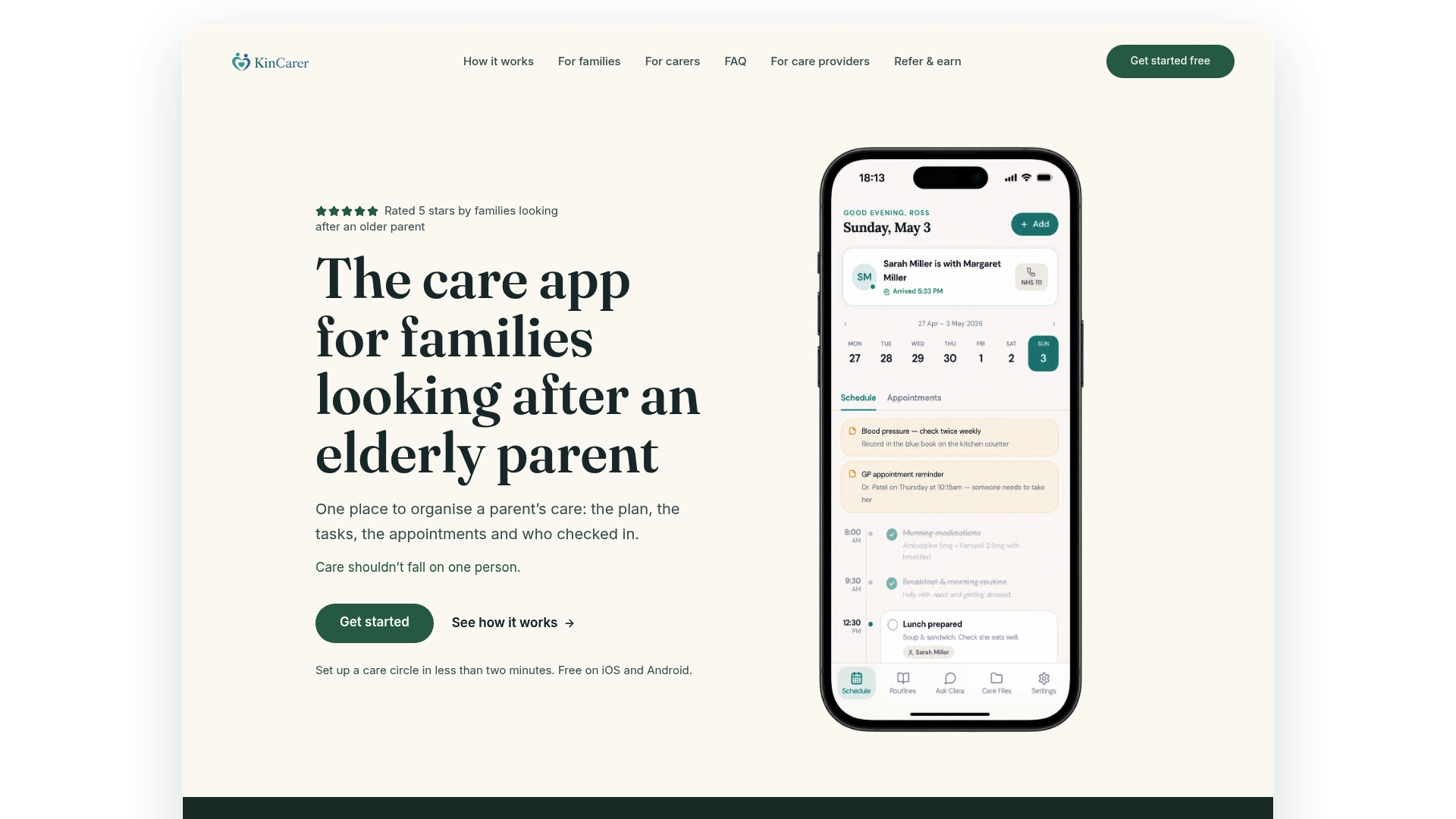
The Family+ plan covers everyone you invite to the care circle under one family subscription, and you can see how it works on our Family+ page. Or take a look at the KinCarer app to see how a care circle looks before you decide.
Talking to the hospital: what to check first
Before or at admission, a few questions save time:
- Is there a patient property basket or locker for small items?
- Are there rules about food, electrical items or visiting times on this ward?
- Can staff note any special support needs, such as hearing loss or dementia?
- Who is the best contact on the ward for updates?
If you are an unpaid carer yourself, ask about support for you too. Leeds Teaching Hospitals says ward staff aim to discuss the Carer Passport and complete the Unpaid Carers Conversation Sheet with carers. Other trusts may have similar schemes under different names, so ask.
Bring your own small bag too if you will be staying: a phone charger, water, a snack and a notebook. Looking after yourself is not selfish. You will be more use to your mum if you have eaten.
FAQ
How big should a hospital go bag for an elderly person be?
Small enough to fit in a bedside locker, such as a holdall or small rucksack. St George’s advises against large bags because storage space on wards is limited. If you need to bring more, such as a walking frame, add it on the day.
Should I pack my parent’s medicines in the bag all the time?
Not usually. Medicines change and can go out of date, so keep an up-to-date list in the bag and add the actual medicines from home on the way out. Hospitals ask patients to bring everything they take, including bought and herbal remedies. If you are unsure which to bring, ask the GP surgery or the pharmacist.
What should I do about documents like power of attorney?
Bring copies of lasting or enduring power of attorney and any living will or advance decision, if they exist. The original DNACPR order, if there is one, should go with your parent. If you are not sure what is in place, check with their GP, and keep the papers together in one folder so they are easy to find.
How often should I update the bag?
A good rule is every six months, and straight after any change in medicines or health. Tie it to a regular event, like the clocks changing, so you do not have to remember. Check the clothes still fit, the batteries are in date and the contact list is right.
What extra should I pack for someone with dementia?
Add a completed ‘This is me’ document, familiar comforting objects, and notes on routines and what helps when they are distressed. NHS trusts say this kind of background helps staff understand what may help the person feel safe and calm. Update it whenever things change.
Sources
- Planning ahead, Torbay and South Devon NHS Foundation Trust
- Preparing for your stay, St George’s University Hospitals NHS Foundation Trust
- Staying with us in hospital, NHS Royal Devon
- Welcome to our hospitals, King’s College Hospital NHS Foundation Trust
- Dementia Specialist Admiral Nurse service, Airedale NHS Foundation Trust
- Enhanced Therapeutic Observations and Care, Leeds Teaching Hospitals NHS Trust
- Red Bag Care Providers Package, NHS