Family Carers: 3 App Check Ins That Make Elderly Safety at Home Stick
Use three short daily check‑ins and a shared care app to log meds, meals and falls.
By The KinCarer team ·
Set up three short daily check‑ins, morning, midday and evening, and assign a primary and a backup carer to each one, recording every check in a shared care plan. This single habit, backed by a tool like Kincarer, turns scattered phone calls and worried texts into a clear, visible routine. The sections below give you the checklist, the scheduling steps and the onboarding tips to make it last.
TL;DR:
- Regular three-part check-ins assist in early problem detection, with medications, meals, and mobility being the most critical observations.
- Using a shared care app with recurring tasks and clear access controls helps ensure consistency and transparency across family members.
- Formal care plan reviews are recommended annually or after significant changes like falls, hospital stays, or new diagnoses.
- Environmental hazards such as loose rugs, poor lighting, and fire safety issues should be checked during every visit to prevent emergencies.
- Framing safety checks as supportive care rather than surveillance encourages cooperation and keeps the involved parent feeling respected.
Table of Contents
- What to record during elderly safety checks at home
- How to schedule and share check-ins using a care app
- Why do digital care records get abandoned?
- When should you review the care plan or escalate?
- Environmental hazards worth checking regularly
- Physical safety aids that reduce daily risk
- Building a simple emergency response plan
- Keeping your parent involved and respected
- A carer’s perspective: sharing the work without the worry
- Run your first week of check-ins with Kincarer
- Sources
- FAQ
What to record during elderly safety checks at home
A good safety check-in isn’t a diary entry. It’s a fast, standardised snapshot that the next carer, or a GP, can read in ten seconds and understand exactly what happened.
Here’s what actually matters:
- Medications — taken, delayed, or missed, with a rough time. This is the single most useful line in the whole log.
- Meals and fluids — what your mum ate and drank, even briefly. Skipped meals often signal something else is wrong before it becomes obvious.
- Bathroom and continence notes — any changes worth flagging, recorded without fuss or embarrassment.
- Mood and cognition — was she chatty, withdrawn, confused, unusually sharp? Patterns here matter more than any single entry.
- Activity and mobility — did she manage the stairs, get outside, seem steadier or shakier than usual?
- Falls or near‑falls — even the ones that seem trivial. A near‑miss today is often a warning for next week.
- Unusual events — a locksmith call, a strange phone scam, a visitor who upset her. Anything out of the ordinary belongs here.
Rather than one long note at the end of the day, split checks into three quick windows: morning, midday and evening. Guidance from caregiver logging resources consistently recommends this three-part daily tracking routine, because short, frequent entries are far easier to keep up than one exhaustive summary written from memory at 9pm.
Keep the format tight. A workable template looks like this:
- Time and who’s checking in
- Medications and meals (one line each)
- Anything unusual (one line, or “nothing to report”)
- A one‑to‑five mood or alertness rating, if that helps your family
Simple, repeatable structures like this are what actually get filled in day after day. Fancy templates with twelve fields get abandoned by week two.
How to schedule and share check-ins using a care app
Once you know what to record, the next problem is making sure it actually happens, and that everyone can see it happened. This is where a shared care‑planning app earns its keep over a WhatsApp group.
Start by turning your checklist into recurring tasks rather than one‑off reminders:
- Create three recurring check‑ins tied to morning, midday and evening, so nobody has to remember to set them each day.
- Assign a primary carer and a backup for each slot, so a missed check doesn’t just vanish into silence.
- Set flexible reminder windows rather than a rigid single minute, since real life rarely runs on schedule.
- Attach a short handover template to each check‑in, so whoever completes it fills in the same few fields every time.
Read and acknowledge workflows solve a problem every family carer knows well: did anyone actually see that mum skipped lunch, or is that note just sitting unread? A shared record that marks a check as “seen” closes that gap. In some care apps, a care circle, tasks, check‑ins, medication reminders and handover notes all live in one place, so a sibling checking in from work can see instantly what’s already been done, without ringing anyone to ask.
Privacy still needs a conversation, not an assumption. Decide together who sees what, particularly for sensitive notes about continence or mood, and agree it before the first awkward moment arises rather than after.
Why do digital care records get abandoned?
Digital care records tend to fail for the same handful of reasons every time: the tool doesn’t fit how the family actually works, nobody was properly shown how to use it, the text is too small to read comfortably, or the internet drops out at the worst moment. A rapid evaluation of digital social care record rollouts found exactly this pattern, noting that offline capability and proper training made the difference between adoption and abandonment.
You can avoid most of this with a short rollout plan:
- Run a ten‑minute demo with the whole family before anyone relies on it for real.
- Write a one‑page quick guide covering the three or four things people actually need to do.
- Nominate a “keeper” who checks the log weekly and tidies up any mistakes.
- Keep a paper or phone‑list fallback for the days the internet or app misbehaves.
Accessibility fixes matter more than most families expect. Larger text settings, voice notes instead of typing, and photos in place of long descriptions all make check‑ins realistic for less tech‑confident relatives.
Pro Tip: Schedule a fifteen‑minute weekly tidy‑up, ideally the same time each Sunday, where the keeper reviews the week’s entries and clears up anything vague. This single habit does more to prevent alert fatigue than any app feature.
When should you review the care plan or escalate?
Formal reviews shouldn’t wait for a crisis. NICE guidance recommends that older people with multiple long‑term conditions and social care needs have their plan reviewed at least once a year, and again whenever circumstances change, a fall, a hospital stay, a new diagnosis.
Between those formal reviews, certain patterns in your daily log should prompt faster action:
- Repeated falls or near‑falls, even minor ones, especially if they’re becoming more frequent.
- New or worsening confusion, particularly if it appears suddenly rather than gradually.
- Major changes in appetite or weight, noticeable over a week or two of logged meals.
- Medication errors, especially a missed dose of something time‑sensitive.
- Breathing difficulty or chest pain, which always warrants an urgent call, not a wait‑and‑see approach.
When it’s time for a GP or community nurse appointment, your logged check‑ins become genuinely useful. Pull together a short summary, a week or two of medication patterns, meals, mood and any incidents, rather than turning up with nothing but a general impression. Clinicians consistently find this more useful than a verbal recap from memory.
Environmental hazards worth checking regularly
Safety check‑ins aren’t only about routines and records, they’re also a moment to notice the home itself. A quick visual sweep during your visit catches problems before they become emergencies.
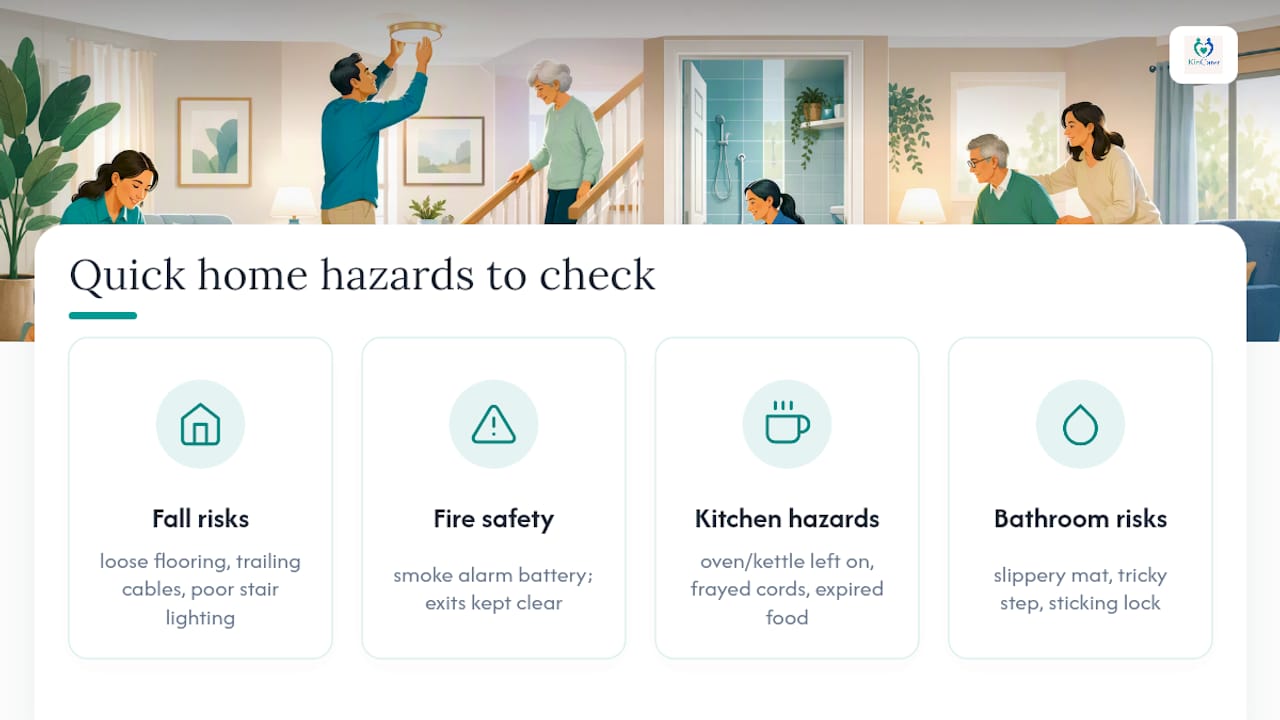
Fall risks top the list: loose flooring, trailing cables, poor lighting on stairs, and clutter in walkways. These are worth a glance every visit, not just an annual once‑over. Fire safety deserves the same attention, check smoke detectors have working batteries, that emergency exits aren’t blocked by furniture or boxes, and that your mum knows which door to use if she needed to leave quickly.
Kitchen hazards often get overlooked because they’re familiar. An oven left on, a kettle with a frayed cord, or expired food sitting unnoticed can all slip past someone whose sense of smell or memory has changed. Bathroom risks matter too: a bath mat that’s lost its grip, a step that’s become harder to manage, or a lock that sticks.
None of this needs a formal inspection form. A short note in your check‑in log, “smoke alarm tested, battery fine” or “noticed the hallway rug has curled at the edge”, is enough to flag it and track whether it’s been sorted. Recording these small observations in the same place as your daily checks means nothing gets forgotten between visits, and any family member can see what’s already been dealt with.
Physical safety aids that reduce daily risk
Assistive devices work best when they’re chosen for the specific hazard, not bought as a general precaution. A grab rail by the bath solves a different problem than a raised toilet seat, and a walking frame suits a different mobility issue than a stick.
Mobility aids should match how your mum actually moves, not how she moved a year ago. If balance has changed recently, it’s worth a fresh look rather than assuming last year’s stick is still right. Rugs and carpets deserve particular attention because they’re such a common, avoidable trip hazard. Secure edges with non‑slip tape, remove rugs from high‑traffic areas entirely where possible, and check regularly that corners haven’t started curling.
Simple fixes often matter more than expensive equipment: night lights along the route to the bathroom, a phone charger kept within reach of the bed, chairs with arms that make standing up easier. None of these need a professional assessment, just a bit of attention during your regular visits.
Log any equipment changes in your shared record too, when a grab rail was fitted, when a rug was removed. It gives the whole family visibility of what’s already been addressed, and it means nobody wastes time asking a question that’s already been answered.
Building a simple emergency response plan
Every family should agree, in advance, who gets called first and in what order. Waiting until an actual emergency to work this out wastes minutes that matter.
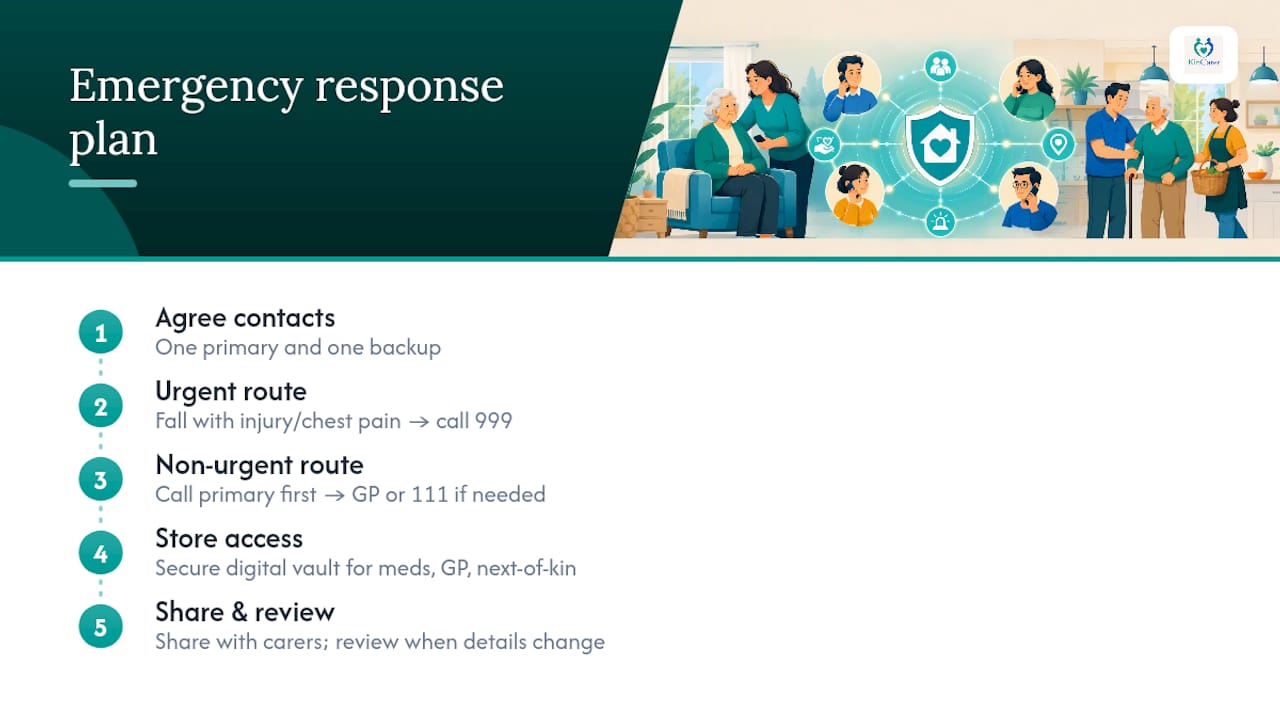
A workable plan is short: one primary contact, one backup, and clear instructions for genuinely urgent situations. For a fall with injury or suspected chest pain, the instruction is simple, call 999. For a non‑urgent concern, like confusion that’s new but not severe, the instruction might be to call the primary contact first, who then decides whether a GP call or 111 is the right next step.
Keeping this information somewhere accessible matters as much as agreeing it. A secure digital vault for family emergency information is a sensible place to store GP details, medication lists and next‑of‑kin contacts, so whoever’s on call isn’t hunting through drawers at 2am.
Share the plan with everyone in the care circle, including any paid home care agency staff involved, so there’s no confusion about who’s responsible for what. Review it whenever a phone number changes, a GP surgery switches, or a new person joins the caring rota. An emergency plan that’s three years out of date is worse than no plan at all, because it creates false confidence.
Keeping your parent involved and respected
Safety checks work far better when your mum feels like a participant rather than a subject being monitored. That distinction shapes how willing she’ll be to answer questions honestly.
Ask rather than announce. “How did the stairs feel today?” invites a real answer; “I’m checking if you fell” puts her on the defensive. Let her see the log if she wants to, some parents feel reassured knowing what’s being recorded, and object to secrecy far more than to the checks themselves.
Involve her in decisions about the home, rather than making changes around her. If a rug needs to go, ask her opinion on the replacement rather than simply removing it one afternoon while she’s out. Frame check‑ins as care, not surveillance: “just want to make sure you’ve eaten” lands very differently to “I need to log what you ate.”
Small dignity matters accumulate. Knocking before entering, keeping bathroom notes brief and discreet, and never discussing her mood or memory as though she isn’t in the room, all of this keeps the process feeling like support rather than supervision.
A carer’s perspective: sharing the work without the worry
Splitting duties by day of the week, rather than vaguely “whoever’s free,” stops the same person carrying everything. Agree backup rules explicitly: if the primary carer misses a slot, who steps in, and by when?
Short, routine entries do more for anxiety than long ones. A one‑line “all fine, lunch eaten” reassures faster than silence ever will, and it cuts the frantic phone calls between siblings. A five‑minute weekly summary, read by everyone, keeps the whole family informed without anyone needing to check constantly, which is where real peace of mind actually comes from.
— KinCarer
Run your first week of check-ins with Kincarer
Some care apps give families exactly the structure this article describes, without needing to build it from scratch in a spreadsheet or a group chat. A shared care circle holds your tasks, check‑ins, medication reminders and handover notes in one place, so everyone sees the same picture instead of piecing it together from missed messages.
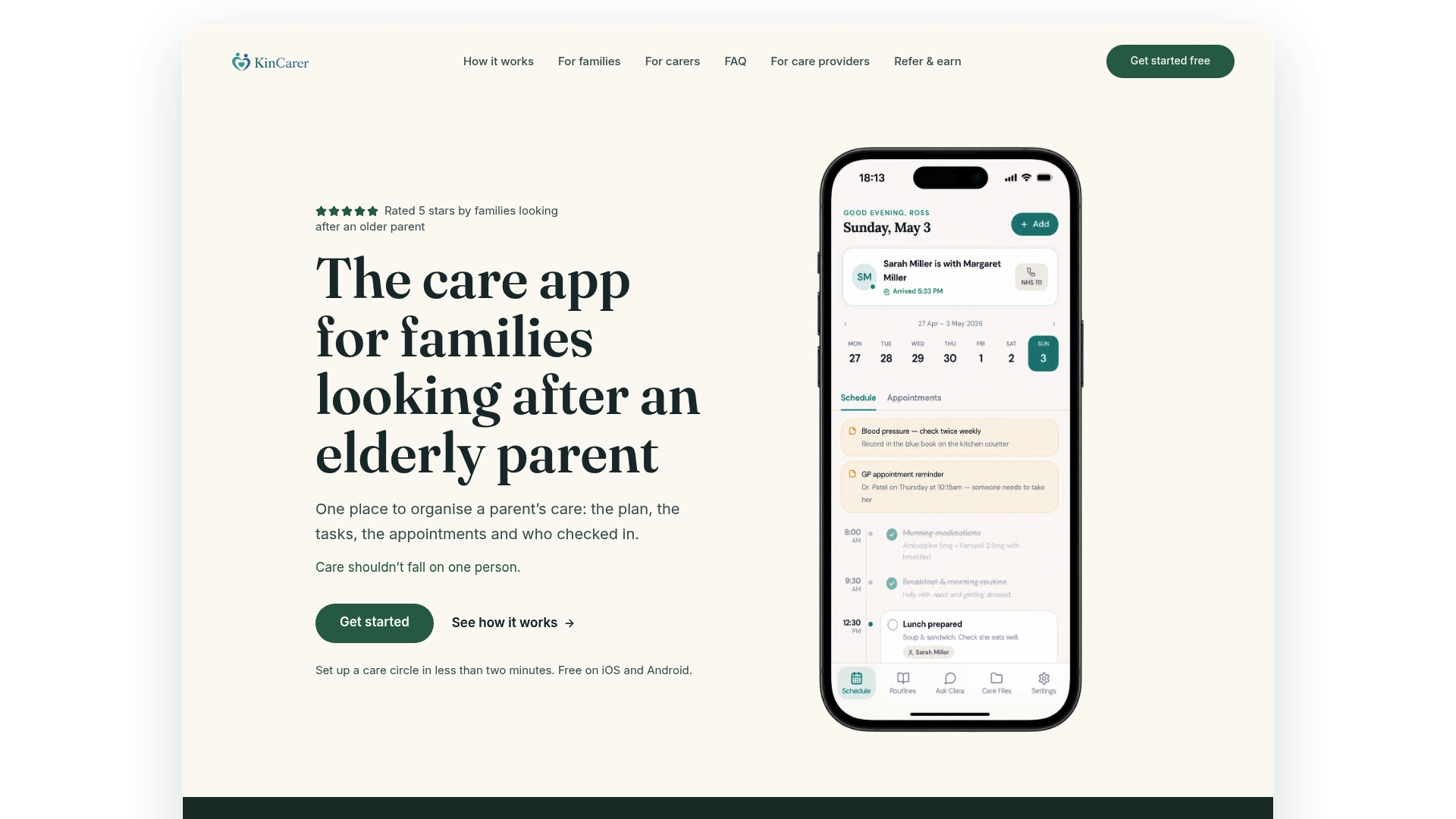
For your first week, keep it simple: set up three recurring check‑ins (morning, midday, evening), invite one other family member into the circle, and run a single weekly tidy‑up to catch anything vague in the log. Some care apps include AI assistants that can pull together what’s been logged, though they do not offer medical or legal advice, which remains a conversation for your mum’s own doctor. Care organisations supporting a family can also be invited into the same circle if paid support is involved.
Start by setting up a shared care circle and adding your first three check‑ins today.
Sources
- NICE quality statement 5 — Review of health and social care plan
- Rapid evaluation of implementation of Digital Social Care Records in England — NCBI Bookshelf
FAQ
How often should elderly safety checks at home happen?
Three short check‑ins a day, morning, midday and evening, work better than one long daily visit, because they catch problems earlier and keep entries quick enough to actually maintain.
What should be recorded in a daily safety check?
Medications, meals and fluids, mood and mobility, and any falls or unusual events, ideally logged in the same short template each time so entries stay consistent.
How do I share check-ins with the rest of the family?
A shared care‑planning app like Kincarer lets you assign recurring check‑ins, mark them complete, and leave handover notes everyone in the care circle can see instantly.
When should the care plan be formally reviewed?
At least once a year, and immediately after any change in circumstances such as a fall, hospital admission or new diagnosis, following NICE guidance.
What if my parent doesn’t want to be checked on?
Frame check‑ins as everyday care rather than surveillance, ask open questions, and let her see the log if she wants to, cooperation improves when she feels included rather than monitored.