
UK Carers: Use the Care Act to Prevent Burnout and Get Respite
UK carers: prevent burnout with practical steps. Claim a Carer's Assessment under the Care Act, set a two hour weekly break, and trial a shared care plan.
By The KinCarer team ·
The single most protective thing you can do is arrange a regular break and protect it, then request a carer’s assessment from your local council. Both matter because 65% of carers feel overwhelmed mainly because they haven’t had a break, and under the Care Act 2014 you’re entitled to that assessment regardless of your finances. The prevention strategies section below shows exactly how to set both up this week.
TL;DR:
- Setting up a weekly, protected break with help from local support services significantly reduces the risk of burnout and can be arranged quickly with formal or informal assistance.
- Recognizing emotional, physical, and behavioral signs early, especially when caring more than 20 hours weekly or living in the same household, allows timely intervention before burnout becomes severe.
- Using coordination tools to share care tasks, appointments, and medication reminders helps distribute the mental load and prevents information overload that often leads to stress.
- Requesting a carer’s assessment from the local authority and exploring respite funding options ensure access to necessary services and legal protections, regardless of financial status.
- Building a support network through peer groups, community support, and informal help fills gaps in formal services and offers vital emotional relief for ongoing caregiving challenges.
Table of Contents
- What is carer burnout prevention and who needs it?
- How do you know if you’re heading towards burnout?
- What are the best strategies to prevent caregiver fatigue?
- How do you get a carer’s assessment and respite funding?
- Which coordination tools reduce caring overload?
- When should you seek urgent help?
- Does nutrition really affect caregiver burnout?
- How do you manage the financial strain of caring?
- What legal rights and protections do carers have?
- How do you build a support network beyond formal services?
- How does caregiver burnout prevention differ by condition?
- Asking for help is a strategy, not a failure
- A quieter way to share the load with your family
- Sources
- FAQ
What is carer burnout prevention and who needs it?
Carer burnout is the point where the physical and emotional cost of looking after someone else outweighs your capacity to recover between caring tasks. It’s different from the tiredness that comes with a hard week. Ordinary stress fades once the immediate pressure lifts; burnout builds quietly over months, often while you’re too busy to notice it happening.
You might recognise it if you’re helping your mum manage a stroke recovery, coordinating appointments for a partner with early dementia, or juggling a job alongside caring for a disabled child. The situations look different, but the underlying strain is the same: no clear end point, no handover, and often nobody checking how you’re coping.
The scale of this is bigger than most families expect. Over a third of carers report bad or very bad mental health, a figure that reflects sustained strain rather than a bad week. Left unaddressed, burnout doesn’t just harm the carer. It raises the risk of the whole care arrangement breaking down, sometimes forcing a sudden move into residential care that nobody wanted or planned for.
Prevention matters because:
- Early recognition lets you intervene with a two-hour weekly break rather than a crisis intervention months later.
- A carer who burns out often stops noticing changes in the person they’re caring for, which can delay spotting a decline in health.
- Care breakdown tends to happen suddenly, not gradually, which means the safety net needs to be built before you need it.
How do you know if you’re heading towards burnout?
Burnout rarely arrives as a single moment. It shows up as a pattern, and the pattern usually falls into three categories.
Emotional signs come first for most people: snapping at your ageing parent over something trivial, feeling numb rather than moved by their good days, or a creeping sense that nothing you do makes a difference. Physical signs follow: persistent tiredness that sleep doesn’t fix, tension headaches, or getting every cold going around. Behavioural signs are often the ones other people notice before you do: forgetting appointments you’d normally never miss, turning down invitations you used to say yes to, or losing patience with people who aren’t even involved in the caring.
Certain circumstances make burnout far more likely:
- Caring for more than 20 hours a week on top of a job or other family responsibilities.
- Living in the same household as the person you care for, which removes the natural boundary of “going home”.
- Having had no proper break in the past year, a pattern that’s more common than most people assume.
- Financial pressure from reduced working hours or unclaimed benefits.
- No one else involved, so every decision and every 3am phone call lands on you alone.
If you’re ticking off three or more of those, it’s worth acting now rather than waiting for a clearer signal.
Statistic callout: 65% of carers say they’ve felt overwhelmed mainly because they couldn’t take a break, and a separate survey found many carers had taken no break at all in the previous year despite reaching what they described as breaking point.
Pro Tip: Run through the checklist above once a month, not just when you’re already struggling. Burnout is far easier to head off at the “tired and irritable” stage than at the “can’t get out of bed” stage.
What are the best strategies to prevent caregiver fatigue?
Prevention isn’t one big fix. It’s a handful of small, testable habits that add up, and the good news is you don’t need to overhaul your life to start.
Protect a regular break, not just an occasional one
A single day off does less good than a smaller break you can rely on every week. Try a rota with a sibling or another relative that guarantees you two hours on the same day each week, no exceptions. If there’s no one else, look at paid short-term home support for a few hours, a local day service, or a short residential respite stay for longer breaks. Local authority guidance consistently points to respite and short breaks as one of the most reliable ways to sustain a caring role over the long term.
Set boundaries with family before resentment sets in
Avoiding caregiver burnout often comes down to distributing the load fairly, and that means having an uncomfortable conversation early rather than a worse one later. A simple approach:
- Write down every task involved in the caring week, from medication reminders to grocery runs, so the invisible work becomes visible.
- Ask each relative to commit to one or two specific tasks, not vague “help when you can” offers.
- Put it in writing, even informally, so nobody quietly drops their part after the first fortnight.
If a sibling pushes back, try framing it around fairness rather than blame: “I’ve listed everything mum needs each week. Can you take Tuesdays and the pharmacy pickups?” is easier to say yes to than “you never help”.
Build self-care into the day you already have, not a day you don’t
Realistic self-care for carers looks less like a spa weekend and more like five minutes of deliberate breathing before you go into your parent’s room, or a short walk while the kettle boils. Sleep hygiene matters more than most carers admit: a fixed wind-down routine, even a short one, protects the sleep you do get. Micro-breaks, ten minutes of sitting outside, a quick stretch between tasks, do more for resilience over months than one exhausted attempt at “proper” self-care every few weeks.
Use peer support and social prescribing
Talking to other carers who understand the specific exhaustion of caring, rather than well-meaning friends who don’t, tends to help faster than people expect. Local carers’ centres run peer groups, and many areas have dementia cafés where you can bring the person you care for along, so the break doesn’t require separate arrangements. Ask your GP about a referral to a social prescribing link worker, who can connect you to non-clinical community support such as walking groups or activities that rebuild the social contact caring can quietly erode.
Templates worth having on paper
A weekly care roster listing who does what and when removes the daily negotiation. A handover note checklist, medications given, mood, anything unusual, meals eaten, means whoever takes over next isn’t starting from zero. An emergency contact plan with GP details, key medications, and next-of-kin numbers saved somewhere everyone in the family can find it, not just in your head, is one of those things that feels unnecessary until the day it isn’t.

How do you get a carer’s assessment and respite funding?
You have a legal right to ask for help, not just a moral case for it. Under the Care Act 2014, carers in England are entitled to a carer’s assessment from their local authority, and this must look at how caring affects your health, your work or study, and your life outside caring. It’s separate from any assessment of the person you care for, and you don’t need to be in financial hardship to request one.
Here’s how to make it count:
- Contact your local council’s adult social care team and ask specifically for a carer’s assessment, not a general enquiry.
- Bring evidence with you: a rough log of hours spent caring each week, examples of how it’s affected your sleep, work, or health, and specific incidents rather than general statements.
- Ask about respite funding routes during the assessment, including direct payments (money to arrange your own support), council-arranged short breaks, or subsidised day services.
- Follow up with your GP and ask for a referral to a social prescribing link worker, who can point you towards local, non-clinical support that a council assessment might not cover.
Councils have a duty to provide information and advice about preventing or delaying carer needs even if you don’t meet formal eligibility criteria, so it’s worth asking regardless of how borderline your situation feels.
Which coordination tools reduce caring overload?
A lot of carer burnout isn’t caused by the physical tasks themselves. It’s the mental load of holding every appointment, medication change, and family update in your head, and being the only person anyone calls when something goes wrong. Sharing that load through a proper care circle, rather than a scattered WhatsApp thread, changes the daily pressure noticeably.
Look for a coordination tool that offers:
- A shared calendar everyone in the family can see and update.
- Task assignment, so jobs are visibly allocated rather than defaulting to whoever’s already exhausted.
- Medication reminders that don’t rely on one person’s memory.
- Handover notes so nothing gets lost between visits.
- Permission controls, so you can invite a paid carer or distant relative without handing over everything.
An example of such a tool builds around exactly this model: a shared care circle where relatives and paid carers see the same tasks, appointments, and notes, with an optional AI assistant that helps summarise what’s in the circle. This assistant doesn’t give medical or clinical advice; it’s there to save you re-reading three weeks of messages to find one detail.
Pro Tip: Start small. Invite two relatives, set up three key tasks, medication reminders, the next GP appointment, and a shared shopping list, and run it for a fortnight before expanding. You’ll know quickly whether it’s cutting down the missed updates.
When should you seek urgent help?
Some signs need action today, not next week: thoughts of harming yourself, severe self-neglect (not eating, not washing, ignoring your own medical needs), or a growing risk to the person you’re caring for. If any of these apply, call your GP the same day or contact NHS 111.
Before the appointment, jot down specific examples, not just “I’m struggling”, and be ready to say directly: “I need respite support” or “I need a mental health referral.” Naming the support you want speeds things up considerably.
Does nutrition really affect caregiver burnout?
Skipping meals or living on toast and coffee between tasks is common among carers, and it compounds fatigue rather than causing it outright. Steady blood sugar through regular meals helps prevent the irritability and afternoon energy crashes that make every caring task feel harder than it is.
You don’t need a complicated diet plan. Batch-cooking simple meals on a calmer day, keeping easy protein snacks (nuts, yoghurt, boiled eggs) within reach, and staying hydrated through a long day of appointments all make a practical difference to how you cope with stress, even if none of it fixes burnout on its own.
Caffeine and sugar can feel like a quick fix during a rough patch, but relying on them daily tends to worsen the sleep problems that are already common among carers. If mealtimes have become an afterthought, that’s often one of the first behavioural signs worth flagging on the self-screen checklist earlier in this piece: a small, practical thing to fix before it becomes another source of guilt.
How do you manage the financial strain of caring?
Reduced working hours, unclaimed benefits, and the direct costs of care (transport, equipment, home adaptations) add a layer of stress that sits underneath everything else. Financial anxiety and caring exhaustion feed each other: money worries disrupt sleep, and exhaustion makes it harder to sit down and sort out a claim form.
Start with a benefits check. Carer’s Allowance, Attendance Allowance for the person you care for, and Council Tax discounts are all worth checking even if you assume you won’t qualify, eligibility rules change and many carers are entitled to more than they realise. Citizens Advice and your local carers’ centre can run a full benefits check for free.
If caring has reduced your working hours, ask your employer about flexible working, many are more open to this than carers expect, particularly since flexible working requests became a day-one right for most employees. Keep a simple record of caring-related costs, mileage to appointments, equipment, extra heating, since some of these may be reclaimable or relevant to a carer’s assessment discussion about the financial impact of caring.
What legal rights and protections do carers have?
Beyond the Care Act assessment, several legal protections exist specifically to ease the pressure on unpaid carers. Employees have the right to request flexible working from day one of a job, which matters if caring responsibilities clash with fixed shift patterns. Carer’s leave gives eligible employees up to one week of unpaid leave a year to deal with caring responsibilities, separate from annual leave or sick leave.
If you’re caring for someone with a long-term condition or disability, the Equality Act 2010 offers protection against discrimination linked to your caring role in some circumstances, known as “associative discrimination”. Lasting Power of Attorney is worth arranging early, before a crisis forces the issue, so you can legally manage finances or health decisions if the person you care for loses capacity.
None of these protections activate automatically. You generally need to ask, in writing, and know the specific right you’re invoking, which is exactly why keeping a simple record of dates, hours, and impact (the same dossier that strengthens a carer’s assessment) pays off across multiple fronts at once.
How do you build a support network beyond formal services?
Formal support matters, but it has gaps, evenings, weekends, the random Tuesday when you just need someone to talk to. Informal networks fill those gaps in ways councils and GPs can’t.
Neighbours who can pop in for twenty minutes, a faith group or community centre, an old friend who’s happy to sit with your mum while you have a haircut: none of this looks like “support” in the formal sense, but it’s often what actually gets carers through a hard month. The trick is asking specifically rather than generally. “Could you sit with mum for an hour on Thursday” gets a yes far more often than “let me know if you can ever help.”
Online carer communities can also matter, particularly late at night when formal services are closed and you just need to know someone else has been through the same thing. The goal isn’t to replace statutory support, it’s to make sure you’re not relying on any single source, so if one falls through (a respite slot cancels, a sibling gets ill) you’re not left with nothing.
How does caregiver burnout prevention differ by condition?
Dementia caring carries a particular strain: the person you’re caring for may not recognise the effort you’re making, and behaviour changes (wandering, repeated questions, occasional aggression) can be exhausting in ways that are hard to explain to people who haven’t lived it. Dementia cafés and specialist Alzheimer’s Society support groups exist specifically because generic carer support often doesn’t fit this experience.
Caring for someone with a physical disability often means the exhaustion is more visibly physical, lifting, transfers, equipment management, and prevention leans harder towards occupational therapy assessments and proper manual handling training, which reduces your own injury risk alongside theirs.
Terminal illness caring compresses everything into a shorter, more intense window. Breaks matter just as much, arguably more, but they’re harder to plan because the timeline is uncertain. Hospice at Home services and Marie Curie nurses exist partly to give terminally ill patients’ families exactly this kind of respite, and asking early, rather than waiting until the final weeks, tends to get better access to it.
Whatever the condition, the underlying prevention principles from earlier sections still apply. What changes is which specific service, dementia café, OT referral, hospice support, fits the caring situation.

Asking for help is a strategy, not a failure
The hardest belief to shift in carer burnout prevention is that reaching out means you’ve failed at caring. It doesn’t. Carers UK frames caring itself as a factor affecting long-term health, which means protecting your own wellbeing isn’t a side project, it’s part of what keeps the care arrangement working at all.
Start with something small this week: request the carer’s assessment, book one guaranteed hour of respite, or have the delegation conversation with a sibling you’ve been avoiding. None of these fix everything overnight, but each one tests whether the system can carry a bit more weight than you’re currently carrying alone. The prevention and formal support sections above cover exactly how to start each of these.
— Kincarer
A quieter way to share the load with your family
The problem of carer burnout often comes down to one person holding every detail in their head—appointments, medication times, who said what to the GP—while everyone else assumes it’s being handled. Centralising all of that into one shared care circle, so tasks, appointments, medication reminders, and handover notes sit in one place that relatives and paid carers can all see, helps avoid information being buried across separate phone calls and missed texts.
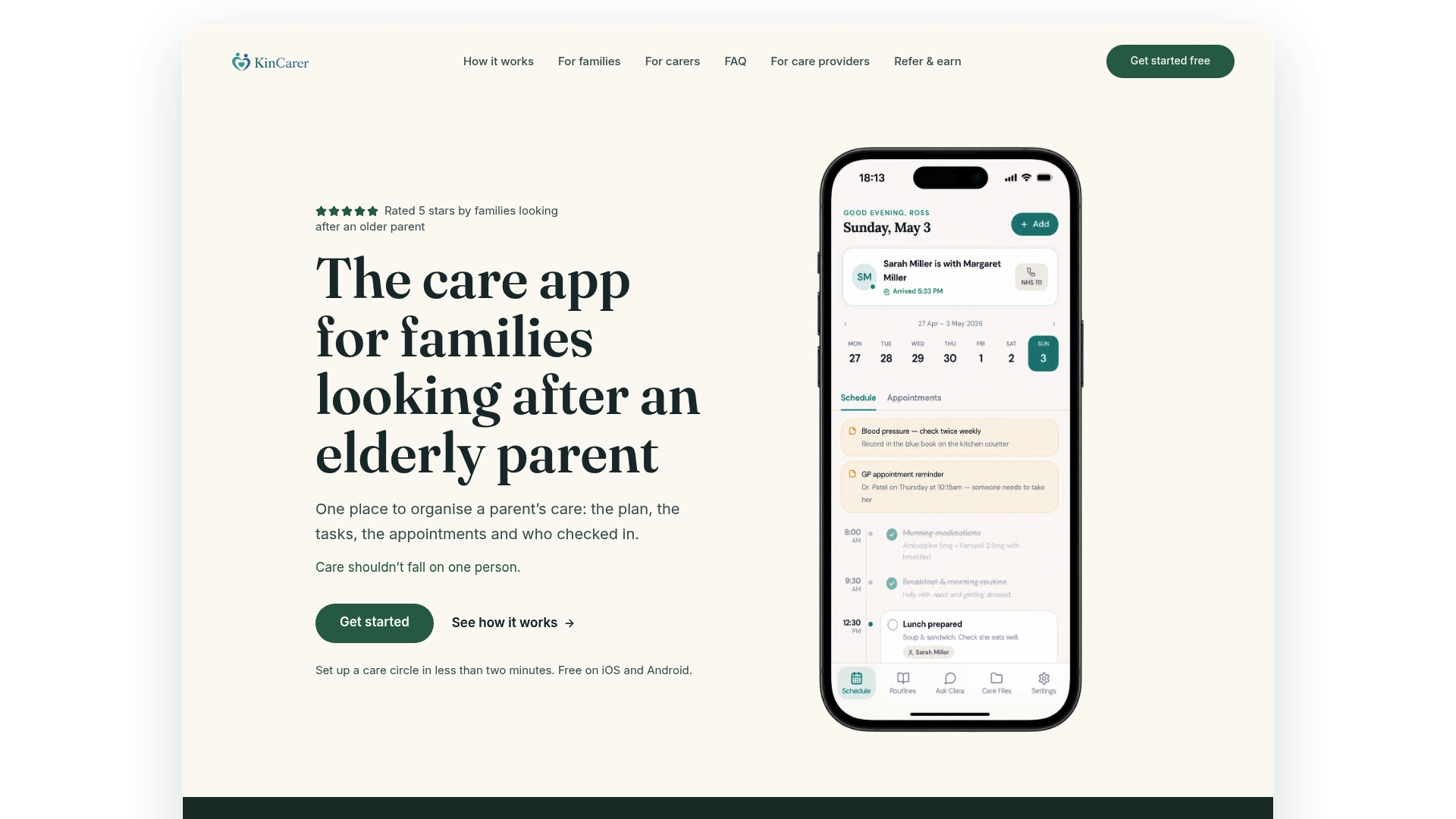
If your family wants to test whether shared coordination actually reduces the load, try a two-week pilot: invite two relatives into a shared circle, set up three tasks, medication reminders, the next appointment, and a rota for weekly check-ins, and see whether missed updates and late-night “did you remember to…” calls drop off. Clara, the app’s built-in assistant, can help you search and summarise what’s already logged, though it’s worth being clear it doesn’t give medical or clinical advice; that’s still a conversation for your GP.
Families managing care for a larger group or through a partner organisation can look at the Family+ options for organisations, while individual families can explore KinCarer for families to see how a shared circle might fit their own caring setup. Start with the 14-day free trial and see whether one week of shared visibility takes some weight off the person currently carrying it all.
Sources
- State of caring 2025 — Carers UK
- Care Act 2014: policy brief — LSE / CPEC
- Social prescribing case studies — NHS England
FAQ
What is one way to prevent caregiver burnout?
Arranging a regular, protected break, even a fixed two hours each week, is one of the most effective single steps, since 65% of carers who feel overwhelmed link it directly to being unable to take a break. Pairing this with a carer’s assessment request tends to work even better, since it opens the door to funded respite options.
What is the main cause of caregiver burnout?
The main cause is usually the combination of unrelenting hours with no reliable break, rather than any single hard task. Living with the person you care for and lacking other family support tend to make this worse.
How long does caregiver burnout last?
There’s no fixed timeline, since it depends on how quickly support is put in place. Carers who wait, and many go a full year without a proper break, tend to see it deepen, while those who arrange respite or peer support early often see symptoms ease within weeks.
What are three signs of carer stress?
Irritability or low mood, persistent tiredness that sleep doesn’t resolve, and forgetfulness or withdrawal from activities you’d normally enjoy are three common signs. Noticing two or more together is worth acting on rather than waiting to see if they pass.
Can a coordination app like Kincarer help prevent burnout?
Sharing tasks, medication reminders, and appointments through a tool like Kincarer can reduce the mental load of being the only person tracking everything. It doesn’t replace statutory support such as a carer’s assessment, but it can ease the day-to-day pressure that contributes to burnout.